How much does Corporate AV Cost?

Sean Walker • November 8, 2024

What does corporate AV costs?

What drives corporate AV costs up?


In corporate AV there are a few major things that dramatically affect the overall price of your event.  Here are the top 2 things that will get you every time.


1 - Venue Selection & Size


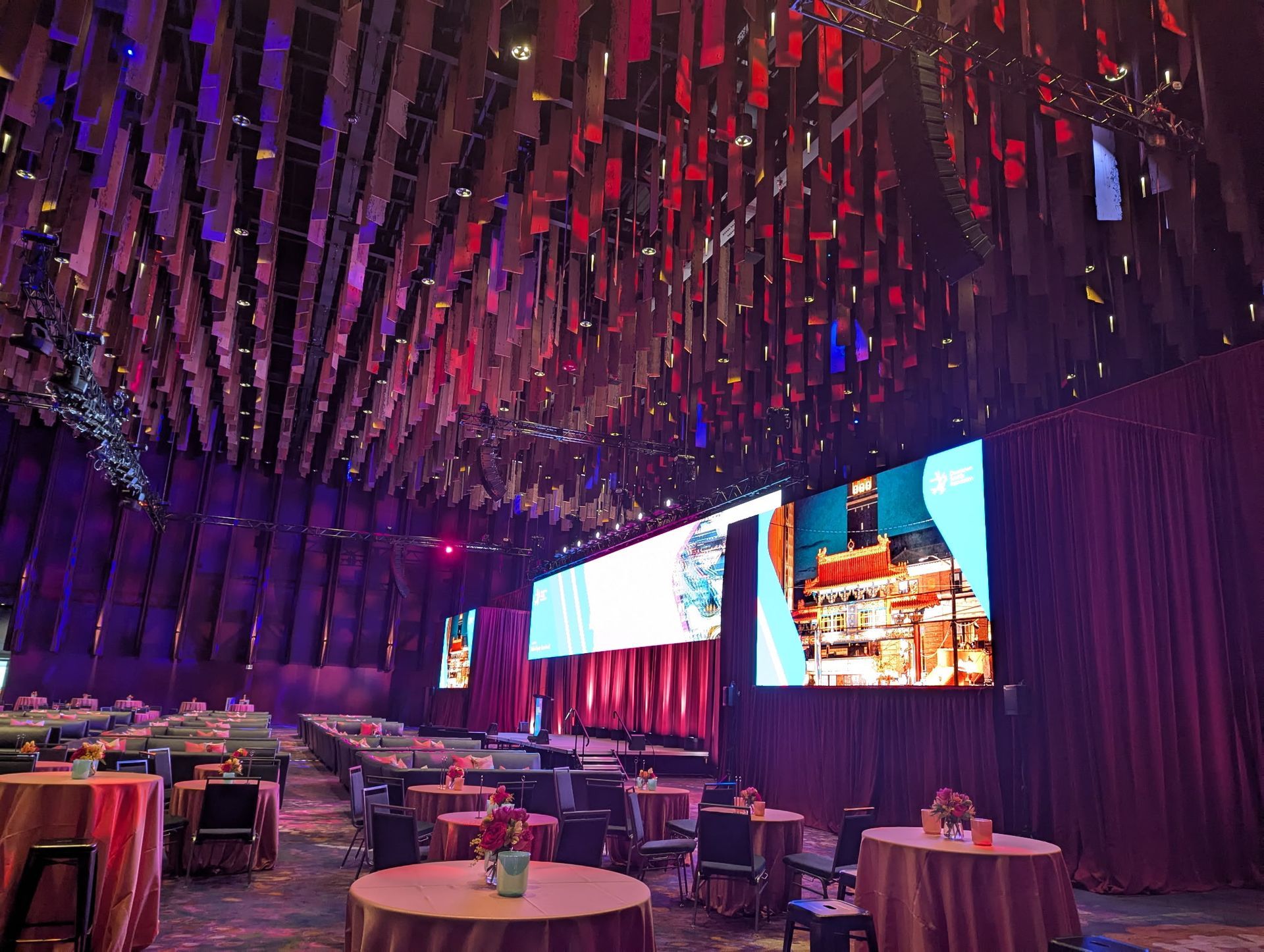
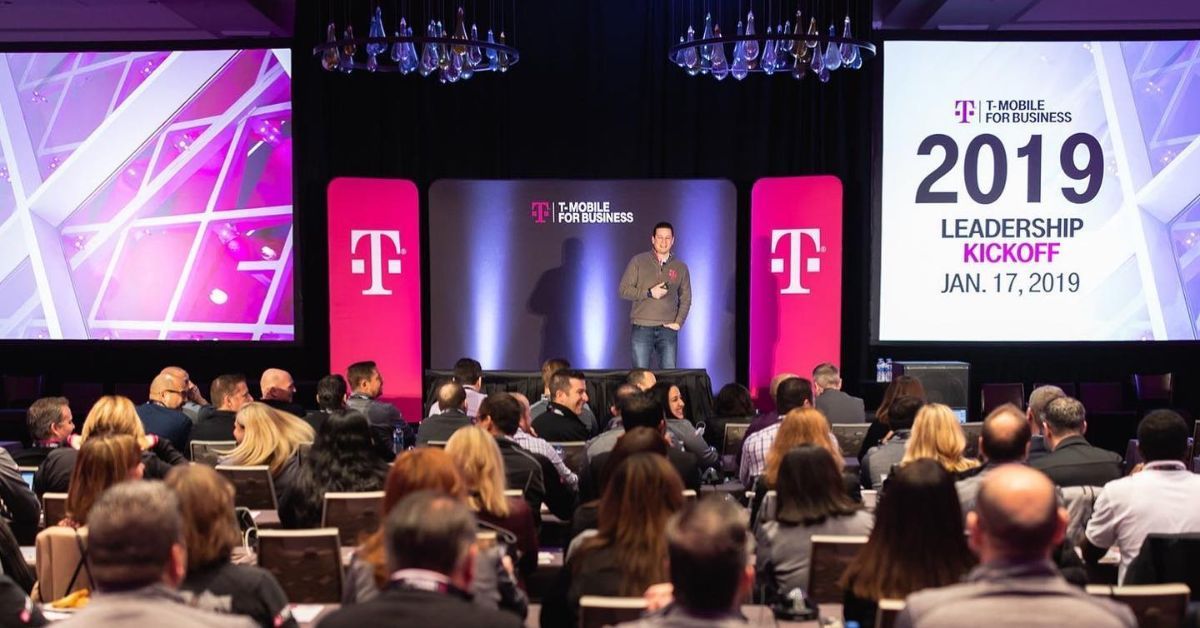
If you are used to small shows of 100-200 people and are planning your first medium show of 500-1000 people you may be shocked by the jump in AV quotes/proposals you receive.  Wait till you do your first 10,000 person show........The reason for that is because in AV, the venue size has a DRAMATIC effect on the amount of PA/Lighting, LED or Screens sizes needed for even coverage of the space. Speakers are like flashlights, they are bright up close and get darker as you get farther away. So, if you want a large space to sound the same everywhere (which you should! Nobody want's complaints that attendee's can't hear) you need a LOT more PA to accomplish that task. Same with lights and Video Wall......Small room small screen, large room large screen...


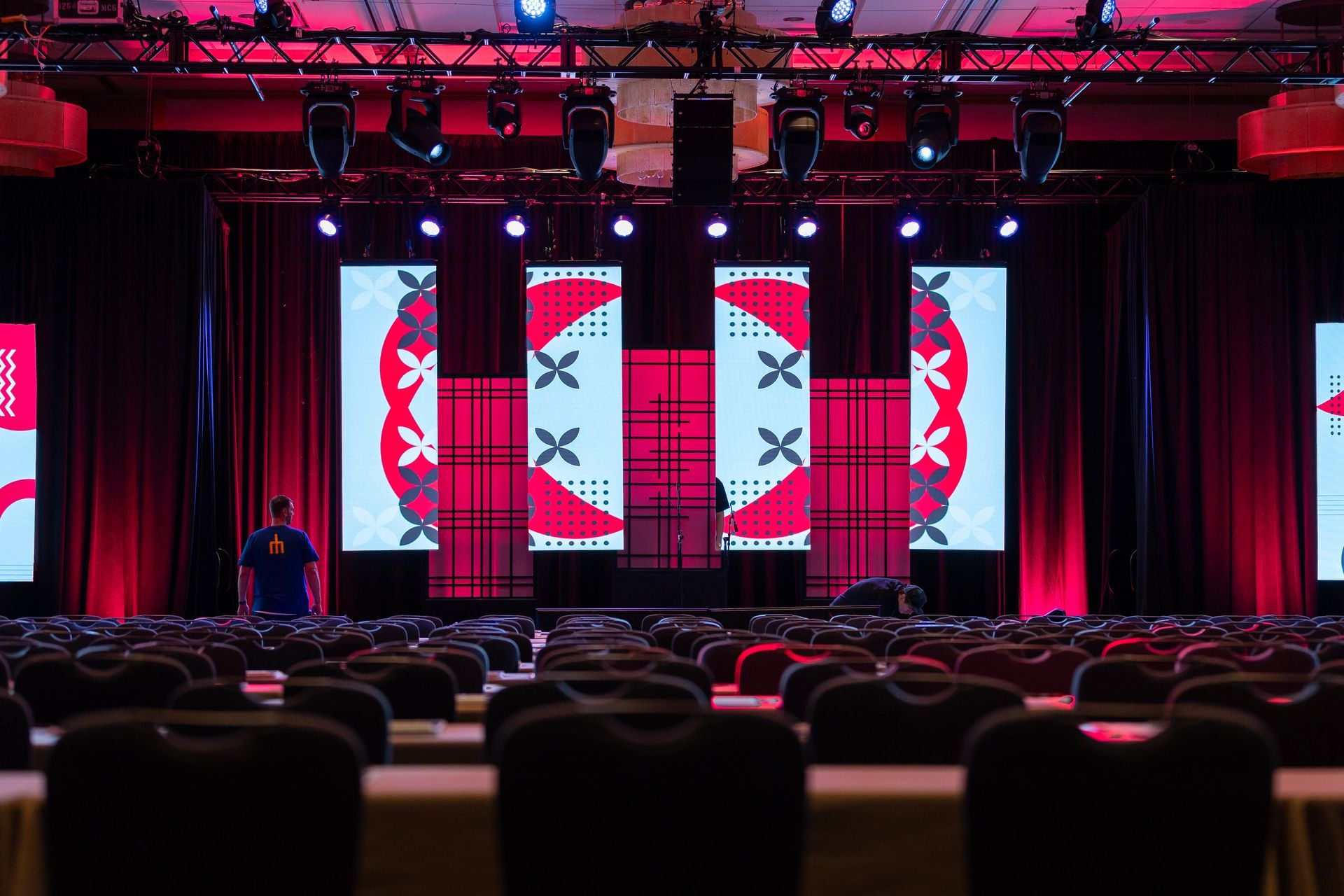
Typically speaking the speakers on tripod stands that are so common on smaller shows are effective out to about 50' or so from the speaker. So, if you have a 100, 150, 200' deep room, you need more speakers.   Now, you can't just go slapping speakers on stands every 50' in the middle of your ballroom, your client will freak out! Out come the line array's and rigging to fly the appropriate amount of speakers and possible delay systems to maintain even coverage of the space so all attendee's have the same experience.


Now with properly deployed line arrays (We'll get there too!) you have effectively doubled your even coverage distance to about 100'.  Nice!  Most hotel ballrooms are in the 100 - 150' range and 20+' of that is used up for backstage A2 land (where the presenters get mic'd up) and the stage itself.  You can typically get even coverage without needing delays in a room that size.  But, those line arrays are going to be hangs of 6-8 boxes each to accomplish that, hence the higher price.


2 - Schedule!


AV companies bill based on a 10 hour day.........10 hours and 1 minuet from good morning how are you, that tech is in OT which is typically 1.5x time.  That adds up quick, especially as there are more techs on the show!  At the 12 hour mark they are in double time. Obviously it's 2x their hourly rate. Holy cow that adds up SUPER fast!

So, when you are making you master production schedule (You ARE making a master production schedule aren't you?) keep this in mind and save you and the client thousands!


What drives corporate AV costs down?


Same   2 things that drive them up! Venue selection and schedule.   Pick a smaller or easier venue and shorten the schedule each day to fit in the 10 hours per day limit.


What makes some companies so expensive?


Quality


Not all AV quotes or proposals are apples to apples!  How do you tell the good from the bad other than price?


One key thing you can do to ensure success is to ask for their prediction files and designs! You don't need to know how to read them or understand them.  What you are trying to discover here is does this person or company know what they are doing?  This is a pass/fail question. If they don't have a prediction file for the show, they are winging it. Plain and simple. ALL audio systems made today that are worth a darn allow us to computer model the room or space it's going to be in and predict the outcome!  How cool!!!!  If a potential AV company doesn't have that or says they don't need it, RUN! RUN as fast and as far as you can! Anything they deploy will be a guess at best and you deserve better than a guess!  If they do have a prediction file, ask them for a low variance design.  This means you want the same sound in the whole venue. NOT stunning loud in the front and quiet in the back. I know this is new and seems like some nerd tech stuff, but SAY THAT WITH CONFIDENCE on your next call or email! We AV companies will sit up straight in our chairs and know we are talking to someone who knows what time it is!  The higher quotes will usually have it and also be able to send it to you in PDF overlay-ed to your room so you can see what your results will be before you even step foot on site!


"Prep" & Pre-Production


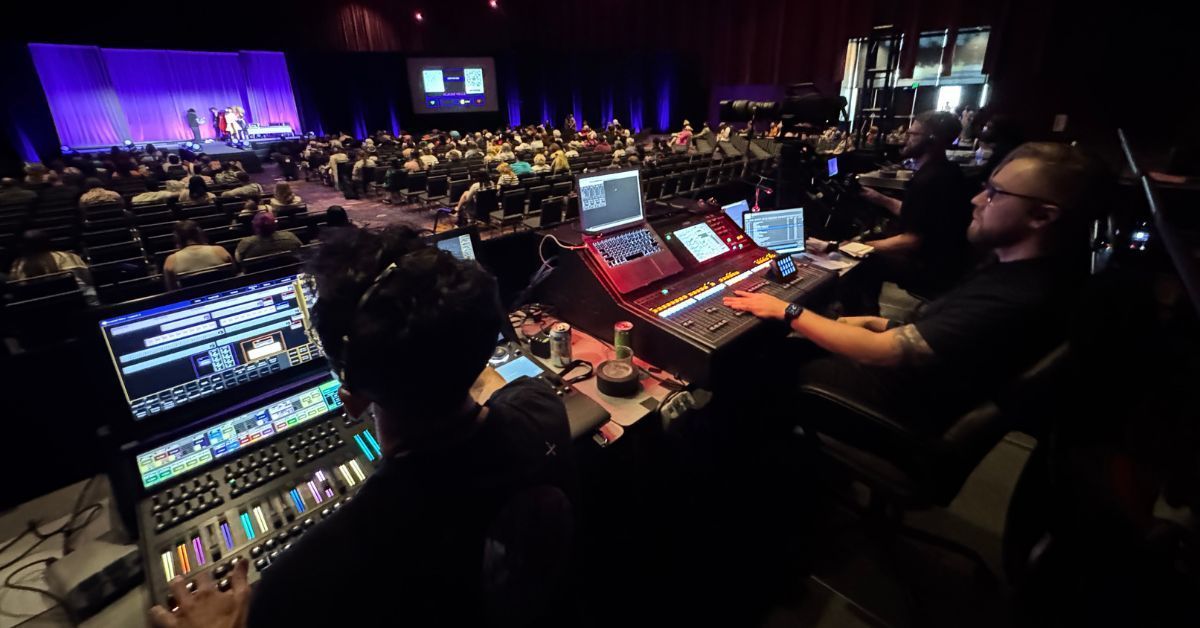
The best companies "Prep" everything in the warehouse before it goes onto your show.  All consoles programmed, all networks tested and functioning, all wireless coordinated for drop out free operation, EVERYTHING pre-built in the warehouse to ensure a flawless execution come show day.  No surprises. That way when they arrive on site, it all clicks together like hi-tech legos in a few hours.  The more pre pro you can do with the vendor after you have selected them, the happier everyone will be.  Here is the place to go over the production schedule and try to save on OT and DT costs, ask about how many hands they need for the in and the out. Potentially saving you thousands in unforeseen costs or wasted expenses. For example if the vendor needs 4 hands for the in and the out but you ordered 8, you wasted money that could have been saved with a simple pre pro call.


What makes some companies so cheap?


The opposite of the expensive companies. No prep, hoping it will all work OK at the event.  Often old and dated equipment. Less experienced techs that have never seen the gear before it's on site and have to try and "Make it work". No real plan and definitely no design or prediction to know how it's going to sound. They are guessing that it will be OK.


Where do our prices fall?


We are costly.  Every show is unique, but our prices start at $10K USD for a small show and escalate quickly.  This is intentional on our part. We don't like getting yelled at. We prefer having fun and being creative. Executing with precision gets us hot and bothered in a good way!  Bring us your challenging, unique and crazy ideas and we will embrace you with open arms to deliver something incredible!


Is it really worth it?


Only you can answer that, because it's event specific and ultimately every event has a budget limit.


Here are some thoughts from some of the different types of events:


If the CEO steps out on stage and the mic doesn't work, everybody is likely fired.  No matter how much money you saved on AV.


It's pretty hard to raise money for a non profit if the slides don't work or bidders can't hear the auctioneer to know when to raise their paddle. 


With Great AV, the technology disappears and the impact, emotion and message are the focus of the event. With poor AV the AV "technical difficulties" are the focus of the event......

By Sean Walker May 20, 2026
You need $100,000 for audio production. Finance proposes $60,000. The difference matters—not because of equipment specs, but because of what gets omitted. We've defended AV budgets for Fortune 500 events for 12 years. The conversation works when you translate technical requirements into business terms: risk mitigation, brand protection, and ROI assurance. The Budget Difference A $60,000 quote versus a $100,000 quote for the same 400-person town hall typically breaks down as follows: Line Item Lower Quote ($60K) Higher Quote ($100K). Impact Wireless Mics. 4 units, single receivers. 8 units, diversity receivers. Coverage gaps, dropout risk Audio Engineer 1 technician, part-time. Lead engineer + system tech Tuning quality, problem response Redundancy. None Redundant Network, backup mics Single point of failure eliminated RF Coordination Basic scanning Full spectrum analysis, licensed channels. Interference risk managed Pre-Event Planning Phone call Site survey, load calculations, Run of Show Unknowns become known Guarantee Standard terms Flawless or We Waive the Fee Risk transfer What the CFO Cares About Finance doesn't need to understand frequency response curves. They need to understand: Reputation risk: A 3-second audio dropout during a CEO keynote generates Slack threads, internal emails, and vendor recriminations that last months. Hidden costs: When the lower quote requires day-of add-ons (extra mics, emergency gear rental, overtime crew), the $60,000 becomes $78,000 before you're done. Vendor accountability: One company manages the entire audio chain. When issues arise, there's one phone number to call, not three subcontractors passing blame. Our Approach We produce 150+ corporate events annually in the Pacific Northwest. The patterns are consistent: 23% of lower-budget AV vendors require mid-event scope increases 18% of events using economy packages experience audio interruptions lasting 30 seconds or longer 0% of events using our standard packages have experienced a guarantee invocation in 2025–2026 The Conversation Script When discussing this with finance, lead with risk, not specs: "This budget protects three things: the CEO's message clarity the company's professional reputation the event's schedule adherence. The $40,000 difference spreads across redundancy planning, RF coordination, and guarantee-backed execution." Next Steps If you're evaluating AV vendors for Q3/Q4 events, request our Technical Scope Verification checklist. It lists the 12 items that separate complete quotes from incomplete ones. We share it with all prospects at no charge. 
By Sean Walker May 20, 2026
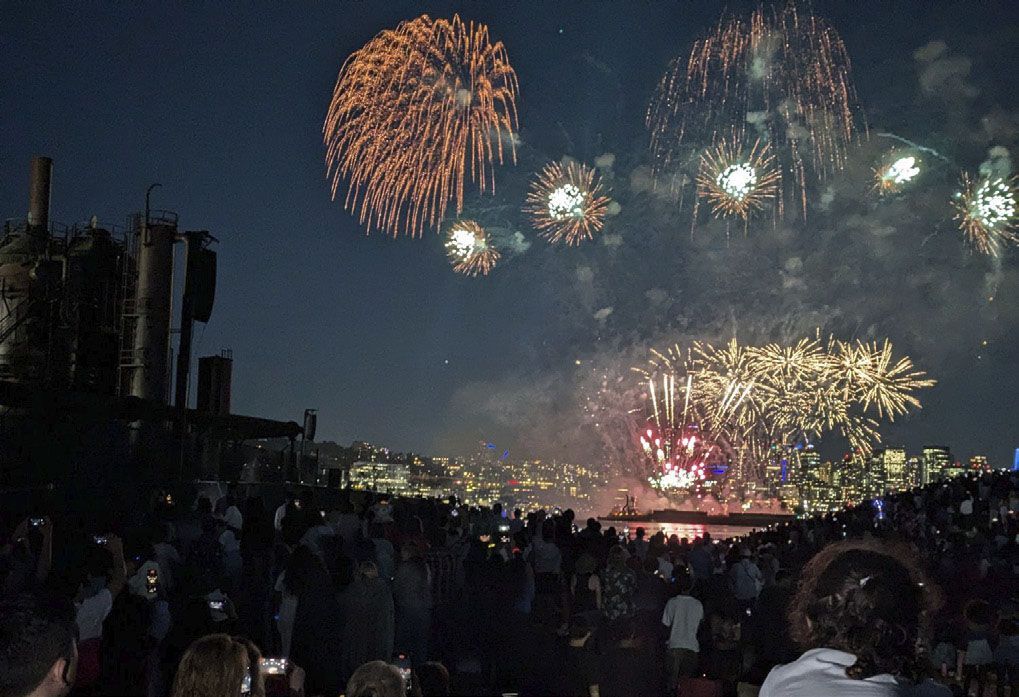
In 12 years of producing corporate events in the Pacific Northwest, we've never had to invoke our "Flawless or We Waive the Fee" guarantee. Not once. That's not because nothing has ever gone wrong at an event. It's because the things that go wrong are handled before the audience notices. Redundancy, preparation, and experienced crew make the difference. Here's what goes into preventing issues before they become problems. Redundancy Is Built In Every event we produce includes multiple layers of protection: Layer System What It Prevents Power Dual-feed capability with UPS switchover Equipment shutdown during circuit interruptions Audio Dual-receiver diversity on all wireless mics. Signal dropouts from interference or body positioning Video Backup switcher and signal distribution Display failure during critical presentations Network Primary broadband + cellular fail over Live stream interruption during hybrid events Crew Lead technician + system tech on-site Single-point failure in personnel coverage Pre-Event Preparation Protocol The work that prevents failures happens before the event begins: Phase Timeline Activity Purpose Site Survey. 14 days out Venue walk through, power audit, RF scan Identify potential issues before they exist Gear Prep 3 days out Equipment pull, bench test, firmware check Verify every unit functions before load-in System Design 7 days out Computer-modeled speaker coverage map. Eliminate dead spots and coverage gaps Crew Briefing. 2 days out. Run of Show review, role assignment Every crew member knows their responsibilities Sound Check Event day Full system test. Confirm performance before doors open RF Coordination: The Invisible Work Wireless microphone interference is the most common issue at corporate events. Most attendees never notice it because competent audio engineers resolve it before the event starts. Our RF coordination process: Pre-show frequency scan within 2 hours of doors opening Full spectrum analysis identifying occupied channels from broadcast TV, emergency services, and other venue RF users Frequency coordination locking all wireless mics to verified clear channels Active monitoring during the event with spectrum analyzer running at FOH position At a 50,000-person Fourth of July celebration in Seattle, we managed wireless microphones across three stages in one of the most RF-dense environments in the Pacific Northwest. Zero interference incidents. That's not luck — it's hours of pre-show frequency mapping by a systems engineer who understands the RF environment. What to Ask Your AV Vendor When evaluating whether a vendor can prevent issues (not just react to them): "What's your pre-event preparation process?" Look for: Site survey, gear testing, crew briefing, RF scan Red flag: "We show up and set up" "How do you handle wireless microphone frequency coordination?" Look for: Pre-show scanning, spectrum analysis, licensed frequencies Red flag: "We just turn them on and pick a channel" "What redundancy is built into your standard package?" Look for: Dual receivers, backup mixers, UPS power, spare inventory Red flag: "We have extra stuff in the truck" "What's your track record?" Look for: Specific numbers, years in business, guarantee history Red flag: Vague claims about "experience" "Can you share your Run of Show template?" Look for: Documented timeline, crew assignments, contingency notes Red flag: "We keep it in our heads" The Track Record Metric Value Years in business 12. Corporate events produced 150+ Guarantee invocations 0 Average crew experience 10+ years Standard protocol Computer-modeled planning, RF coordination, dual-receiver diversity Prevention isn't a marketing claim. It's a documented process applied to every event. The result speaks for itself: 150+ corporate events, zero guarantee invocations. 
By Sean Walker May 20, 2026
You're hosting a town hall in Seattle, London, and Singapore. The CEO speaks once. The feeds must sync perfectly. If the audio lags in London, the Singapore team thinks the connection is broken. If the feedback loops in Singapore, the Seattle team hears it. You're managing chaos across three continents. You know the IT team will blame you if the audio fails. You know the regional leaders will complain if they can't hear. You know the CEO will notice if the feeds aren't synced. We've managed global events for Fortune 500 companies. We know the latency, the bandwidth, the coordination. We don't just set up local systems—we orchestrate a global network. The Plan: Central Command: We establish a master control hub to monitor all sites. Latency Testing: We test the network before the event to ensure sync. Local Teams: We deploy certified teams at every site, backed by our central command. Success: The CEO speaks once. Everyone hears perfectly. The feeds are synced. You're the producer who made global feel local. Failure: The feeds lag. The audio echoes. The CEO looks confused. You're the producer who couldn't manage the complexity. Don't let geography break your event. Book our global event coordination service.
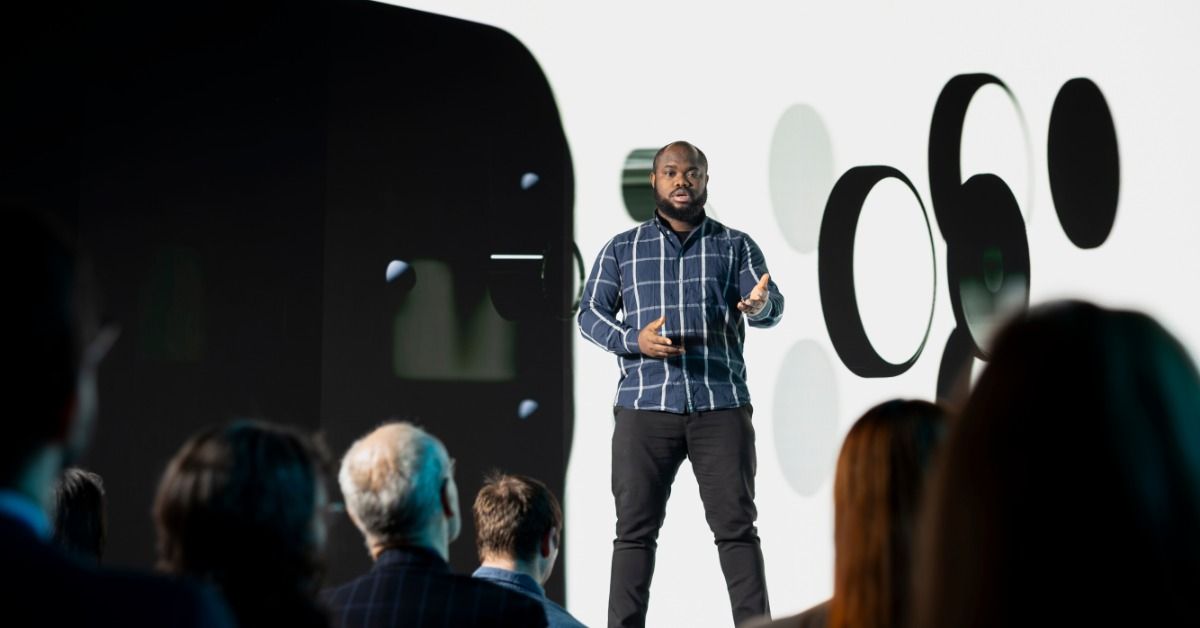
A man on a stage with a bright white backdrop gestures while speaking to an audience.
By Sean Walker May 1, 2026
Generate buzz and momentum with a well-designed event. Purposeful lighting and sound enhance speeches, visuals, and transitions to make the maximum impression.
A close-up of a microphone positioned at a podium, with a blurred audience seated in the background
By Sean Walker April 15, 2026
Strengthen your town hall with audio that keeps every voice clear and consistent. When sound falls short, even strong messages can lose their impact.
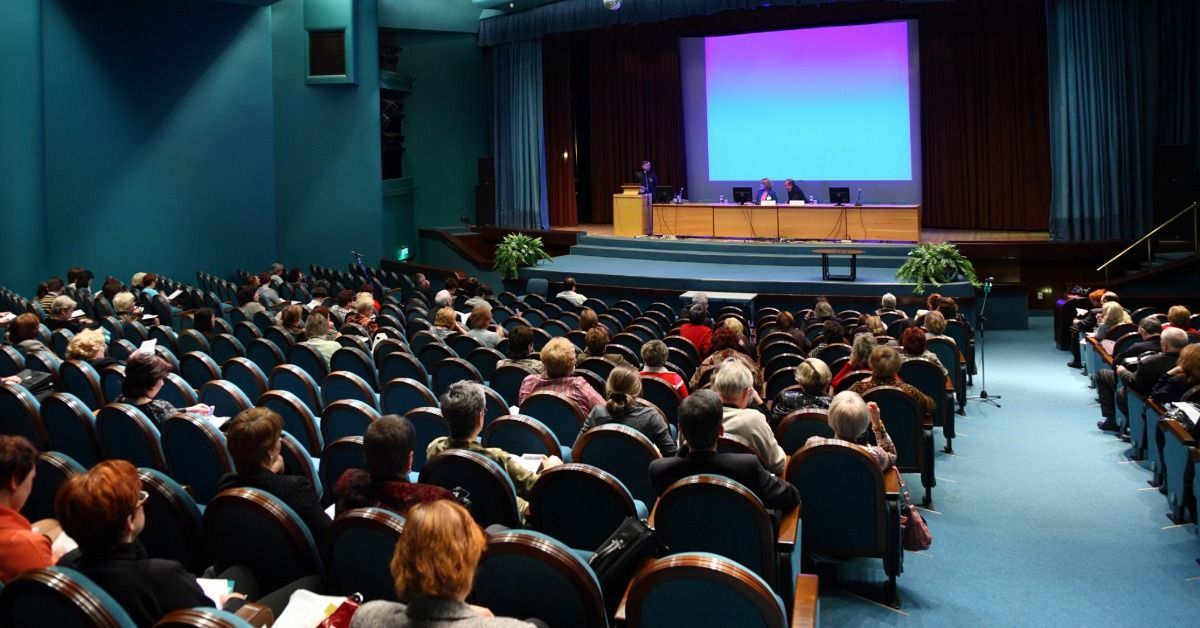
On a stage, one person stands at a podium and two sit at a table in front of a projection screen.
By Sean Walker March 12, 2026
Cheap AV is built on poor tradeoffs that can derail your schedule and distract your audience. See how AV shortcuts can undermine your conference and reputation.
How to Avoid Embarrassing Mic Failures at Company Events
March 2, 2026
Prevent microphone malfunctions at corporate events with essential tips on setup, testing, and management to ensure clear communication and professionalism.
View from behind an audience watching a presenter at a professional event. Blue light illuminates th
By Sean Walker January 12, 2026
Live sound production eliminates distractions and enhances clarity. Connect with your audience at your corporate keynote with professional audio.
By Sean Walker October 31, 2025
Pro Tip:
By Sean Walker December 29, 2024
Do you use "One Stop Shops" Thinking they are easier for your events?